The right machine depends on the waffle style, portion size, peak-hour demand and electrical capacity of your site—not on the lowest price or the highest cavity count. By comparing menu fit, real output, installation needs, cleaning and service support, you can specify equipment that performs reliably during Nagpur’s busiest service periods.
Key takeaways
- Choose a waffle maker for thick waffles and a cone maker for thin rollable sheets.
- Calculate hourly demand from actual bake and recovery times, not cavity count alone.
- Check electrical load, ventilation, clearance and burn protection before installation.
- Demand plate material, cleaning access, warranty terms and spare-parts details in writing.
Start with the menu: waffle maker or waffle cone maker?
Choose a waffle maker for thick, plated waffles; choose a waffle cone maker for thin sheets that you roll around a cone while hot. The wrong plate will give you the wrong texture, portion and service speed, regardless of price.
| Option | Plate design | Best fit |
|---|---|---|
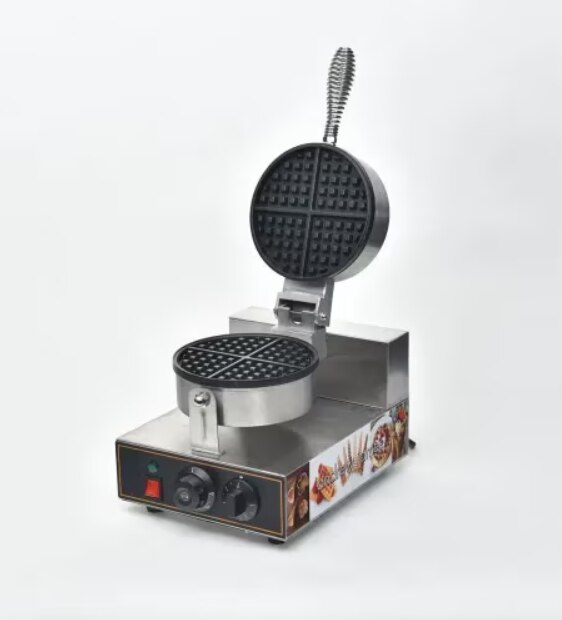
| Thick Belgian or Brussels waffle maker | Deep square or rectangular cavities; holds more batter, fruit, cream and syrup | Café plates and desserts |
| Liege waffle maker | Smaller, deeper cavities suited to yeast dough and pearl sugar | Dense, caramelised grab-and-go waffles |
| American waffle maker | Shallower grid and smaller portion | Breakfast menus, sandwiches and faster service |
| Waffle cone maker | Flat, shallow patterned plates; produces a thin, flexible round | Ice-cream cones, bowls and rolled wafer products |
Specify the finished portion before comparing models: diameter, thickness, number of sections and target batter weight. A deep Belgian plate is a poor choice for a crisp cone, while a cone plate will not produce the soft centre customers expect from a plated waffle.
For a waffle maker for cafe or bakery in Nagpur, ask whether the plates are fixed or replaceable and whether the pattern matches your menu. Independent upper and lower temperature controls help when different products share one machine, but they add controls that need servicing.
A waffle maker in Nagpur also needs an electrical check before you choose plate size. A 230 V, 16 A circuit supplies about 3.7 kW nominally; a 6 A circuit supplies about 1.4 kW. Match the nameplate to a correctly rated socket, cable, breaker and earth—never an adapter or shared extension board.
Calculate real output before choosing cavity count
Count waffles, not customer tickets. If your busiest hour brings 24 orders averaging 1.5 waffles, your target is 36 waffles per hour, before allowing for queue surges, rejected pieces and cleaning. Divide that demand by the machine’s usable output, not its advertised maximum.
Calculate usable output as: cavities per batch × waffles per cavity × 60 ÷ complete cycle minutes. Include loading, closing, bake time, opening and temperature recovery; preheating belongs in your opening schedule, not your sustained hourly rate.
Test the machine with your batter and portion size because a precise timer and fast recovery can outperform a higher-wattage unit.
| Option | Real production effect | Choose when |
|---|---|---|
| One large double commercial waffle maker | Uses less counter space and reduces staff movement, but one fault or cleaning cycle stops both sides | You need compact installation and have limited menu variation |
| Two independent single units | Provides similar combined capacity with more resilience; one unit can continue during cleaning or a fault | You need backup capacity or separate products and temperatures |
| Independently controlled cavities | Handles different loads with less scorching, but adds controls and service points | Your menu changes waffle style, portion or topping frequently |
A waffle machine for cafes should match your peak queue, not your average afternoon. Ask the supplier for cycle time at your batter temperature, recovery time after opening, timer accuracy and tested waffles per hour. If two machines meet demand on paper, choose the arrangement that still serves customers when one unit is unavailable.
Check power, counter space and staff safety
Your Nagpur site can operate a waffle maker safely only when the electrical circuit matches the machine’s nameplate rating. A 230 V, 16 A single-phase circuit provides about 3.7 kW nominally; a 6 A circuit provides only about 1.4 kW. Never use an adapter or shared extension board to run a higher-rated commercial waffle maker.
Ask an electrician to confirm the socket, cable size, dedicated breaker, earthing and residual-current protection before delivery. A 2.0 kW unit draws roughly 8.7 A at 230 V, while a 3.0 kW unit draws about 13 A. Leave capacity for other appliances on the circuit.
Measure the counter, service clearance and storage area with the plates open. A rotating waffle maker needs extra room for the hinge and turning movement, while a double unit saves counter length but creates one hot, heavy point of failure.
Keep the handle away from the customer queue and the power cord away from wet cleaning areas.
Use this installation checklist:
- Confirm the machine’s voltage, wattage and plug type against the site’s supply.
- Keep heat-sensitive walls, packaging and cloths away from the hot housing.
- Provide stable, level support; deep plates and batter make a unit awkward to lift.
- Fit a heat-resistant handle and place the controls where staff can reach them without crossing the cooking surface.
- Train staff to use dry cloths or heat-resistant gloves, avoid overfilled batter, and isolate power before cleaning.
- Check ventilation and allow the unit to cool before moving or storing it.
A waffle maker in Nagpur that fits the menu but overloads the circuit or crowds the counter is not a workable purchase.
Compare plates, cleaning access and bakery workflow
Choose plates and access points that keep residue out of hinges, seams and the underside, because burnt batter can smoke and transfer bitter flavours even when the cooking face looks clean.
| Construction or layout | Production advantage | Maintenance trade-off |
|---|---|---|
| Two independent single units | One product can continue during cleaning or a fault | Uses more counter space and staff movement |
| One double unit | Saves space and simplifies movement | One failure can stop both cooking positions |
| Cast-iron plates | Hold heat through repeated loading | Heavy, slow to change temperature, and need careful drying or seasoning |
| Aluminium plates | Heat and cool quickly; easier to handle | Coating and flatness suffer from abrasion, overheating and harsh chemicals |
| Flip-style design | Spreads batter through deep cavities and improves colour uniformity | Needs clearance and adds a hinge or rotation assembly |
Inspect the hinge, overflow channel, plate perimeter and underside before buying waffle equipment for bakeries. Ask how each area is reached without dismantling the machine; carbonised batter hidden in a seam becomes a recurring smoke and odour problem.
For a cafe using different products, independently controlled upper and lower plates can prevent scorching when one side is loaded first. More controls also mean more service points, so choose them only when the menu needs separate settings.
A batch commercial waffle maker suits made-to-order service. Continuous or semi-automatic waffle equipment adds depositing, mould indexing, release, cooling and conveying, but its footprint and changeover work need enough volume to repay the investment.
- Choose a removable drip tray and smooth, sealed plate surrounds.
- Confirm cleaning instructions allow only the chemicals your staff use.
- Leave access for wiring, thermostats and hinge servicing; a machine that cannot be opened safely will accumulate faults.
Make the quotation prove the machine’s long-term value
A low purchase price proves little if a thermostat failure sends the machine to another city. Make the quotation show the cost and support you will rely on after installation, not just the plate size and headline wattage.
1. Ask the supplier to state voltage, phase, rated power and plug requirements. A 230 V, 16 A circuit supplies about 3.7 kW; a 6 A circuit supplies only about 1.4 kW. Do not run an oversized waffle maker for cafe or bakery in Nagpur through an adapter or shared extension board.
Confirm the correctly rated socket, cable, breaker and earthing.
2. Request separate prices for the machine, GST, freight, installation, electrical work, commissioning, moulds or plates and consumables. The word “commercial” does not prove duty cycle, food-contact compliance or hourly output.
3. Ask whether upper and lower plates, or individual cavities, have independent controls. This helps when different products share one waffle machine for cafes, but adds controls that can need servicing.
4. Get written local service terms and prices or lead times for thermostats, heating elements, hinges, timers and replacement plates. Ask how non-stick coating damage is treated under warranty.
5. Inspect cleaning access around the hinge, overflow channel, plate perimeter and underside. Waffle equipment for bakeries traps burnt batter in closed seams, causing smoke and bitter flavours.
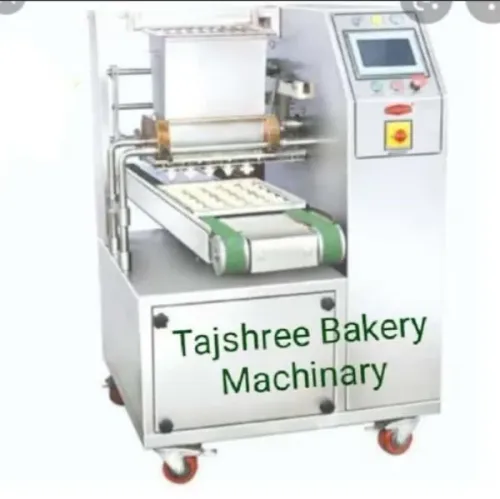
Tajshree Bakery Machinary can be included in your comparison if its quotation answers these points in writing. Treat a continuous system as a separate investment: batter depositing, indexing, release, cooling and conveying justify the higher cost only when volume and labour savings outweigh footprint and changeover complexity.
Related products
 | WAFFLE MAKER ₹11000 Integrated Digital Timer & Temperature Controller Heat Retention Technology - For Faster Baking Customised Aluminium Alloy Hot Plates. View product → |
 | Waffle Cone Maker ₹12000 Design Type: - Standard. Machine Body Material: - SS. Size: - 6-inch cone. View product → |
Frequently asked questions
What is the difference between a waffle maker and a waffle cone maker?
A waffle maker produces thicker, structured waffles for plated or filled service. A waffle cone maker produces thin sheets that you roll around a cone while hot.
How should a cafe calculate the required waffle maker output?
Multiply the number of waffles per batch by batches per hour, then account for bake time, loading, unloading and temperature recovery. Compare that realistic output with your peak-hour demand.
What should you check before installing a commercial waffle maker?
Confirm the machine’s voltage, wattage, plug or hard-wiring requirement, counter dimensions, ventilation needs, operator clearance and hot-surface safety features.
Which waffle maker features matter for bakery cleaning and workflow?
Compare removable or accessible plates, grease-drain design, non-stick surface durability, crumb access, wiping requirements and compatibility with your batter preparation and service routine.
Keywords