A stone-deck oven must match your pizza size, loading pattern, bake cycle and electrical installation—not just its advertised maximum temperature. By checking usable deck area, heat recovery, control options, stone construction, compliance documents and installed cost, you can decide whether the model suits your production line.
Key takeaways
- Measure usable deck space and clearance before estimating pizza capacity.
- Confirm whether listed oven dimensions use inches or centimetres.
- Measure stone temperature instead of relying only on the thermostat setting.
- Compare installed cost with hourly output and bake-cycle demands.
Measure the usable deck before counting pizzas
A listed 26 × 17 stone fits your menu only after you confirm the unit, the true baking area and the gap needed around each pizza. If those figures are inches, the surface is about 66 × 43 centimetres; if they are centimetres, it is only about 10.2 × 6.7 inches.
Ask for the dimension unit in writing.
- Measure the exposed hearth, not the outside stone slab. Subtract the stone border, chamber walls, door lip and any area blocked by heating elements. Record the remaining length and depth.
- Draw your largest pizza diameters to scale, including at least 25–50 millimetres between pizzas and enough space for the peel. A 26-inch length may accept two 12-inch pizzas, but that does not prove comfortable loading or consistent edge browning.
- Check whether “stone” means a removable slab, several refractory sections or a stone-like coating. Obtain the material, thickness and replacement-part number; a coated steel floor behaves differently from a thick refractory hearth.
- Calculate real output as pizzas per load multiplied by loads per hour, then deduct loading, unloading and heat recovery time. A headline capacity describes the chamber, not guaranteed production.
Use this same measurement for an electric pizza oven stone for commercial kitchen selection, rather than trusting the label commercial pizza oven machine. Also ask whether 350°C is only the thermostat maximum or the stable stone temperature after repeated full loads; that distinction changes both capacity and menu fit.
Separate the thermostat setting from the stone temperature
A thermostat set to 350°C does not prove that the stone reaches 350°C. The displayed figure may represent chamber air, the controller’s maximum setpoint, or a sensor near an element. Ask which value it represents and how the supplier measured the stone surface after stabilisation.
A search for “pizza oven 350 degree” is incomplete without the unit:
| Option | Meaning | Purchasing consequence |
|---|---|---|
| 350°F | About 177°C | A severe under-temperature choice for high-heat pizza |
| 350°C | About 662°F | A high-heat rating, not proof of stable hearth temperature |
| 350 degree | Unit not stated | Reject the comparison until the specification identifies °F or °C |
Verify these operating figures before approval:
- Preheating: Record the time from a cold start until the stone reaches the stated baking temperature, not merely until the display reaches its target. Confirm the reading at the centre and front of the deck.
- Recovery: Load the number of pizzas you expect per cycle, open the door as staff would, and measure the stone’s return time. A thick refractory slab holds heat longer but takes longer to warm; a thin deck heats quickly and loses more heat under repeated loading.
- Heat control: Confirm separate upper- and lower-element controls, their adjustment range, and whether the 350°C maximum is a limit or a temperature the stone can sustain throughout production. A good-looking first bake can hide a cold hearth on the next load.
Match heat control and bake cycles to the product
Thin crust needs a hotter hearth and shorter cycle; pan pizza needs gentler bottom heat and more time. Use these as starting profiles, then adjust after measuring the stone surface and checking the centre, rim and underside of the pizza.
| Product | Stone target | Bake cycle | Upper-to-lower heat starting point |
|---|---|---|---|
| Thin crust | 300–330°C | 3–5 minutes | Upper 45%, lower 55%; raise upper heat if the rim stays pale |
| Pan pizza | 220–250°C | 10–16 minutes | Upper 55%, lower 45%; reduce lower heat if the pan base darkens |
| Fresh dough | 260–290°C | 5–8 minutes | Upper 45%, lower 55%; add upper heat after the base has set |
| Frozen pizza | 230–260°C | 6–10 minutes | Upper 50%, lower 50%; use lower heat for a dark or thin frozen base |
| Partially baked base | 240–270°C | 3–6 minutes | Upper 55%, lower 45%; shorten the cycle because the base is already cooked |
Set the upper and lower elements independently if the oven provides those controls. A 350°C thermostat limit does not mean the stone will hold 350°C during production; confirm recovery after a full load, because a thin deck can lose heat quickly.
Treat the bake time as a complete cycle: loading, door opening, baking and unloading. If the crust is finished before the cheese colours, increase upper heat rather than extending the bake, which dries the base. If the underside burns first, lower the hearth setting or move to a cooler recovery cycle.
Verify the stone deck, cleaning method and installation documents
Do not approve the oven until “stone deck” identifies the actual cooking surface, not just a marketing finish. Ask for the stone material, thickness, usable deck dimensions, one-piece or sectional construction, and replacement-part number. Confirm whether the door, heating elements and chamber walls reduce the stated area.
| Deck description | What you are receiving | Approval concern |
|---|---|---|
| Removable refractory slab | A lift-out stone panel | Confirm weight, part number and replacement lead time |
| Modular refractory deck | Several fitted stone sections | Check joints, alignment and individual replacement parts |
| Stone-like coating | A coated metal or composite surface | Do not assume it has refractory heat retention |
Obtain the installation file and confirm:
- The cleaning method for that exact deck: cool it first, then use the specified scraper or brush; never soak, steam-clean, use detergent or pour cold water on refractory stone unless the manual permits it.
- The nameplate voltage—208, 220, 230 or 240 V—phase, amperage, breaker, disconnect, conductor size and plug or hardwire method; have an electrician check local code.
- Required stand, clearances, floor loading, commissioning procedure and service access.
- Hood or exhaust requirements based on emissions, grease load, menu and local fire code; an electric oven still may require ventilation.
- A sanitation certification such as NSF/ANSI 4 and an electrical listing such as UL 197 or equivalent, with documents showing coverage for the exact model. “Commercial grade” is not certification.
Compare the installed cost with your bakery’s throughput
Treat a quoted maximum as a limit, not a production temperature. “350 degrees” is incomplete: 350°F equals about 177°C, while 350°C equals about 662°F. Confirm the unit, whether the figure refers to air or the stone, and the stable hearth temperature after loading.
| Option | Throughput measure | Cost question |
|---|---|---|
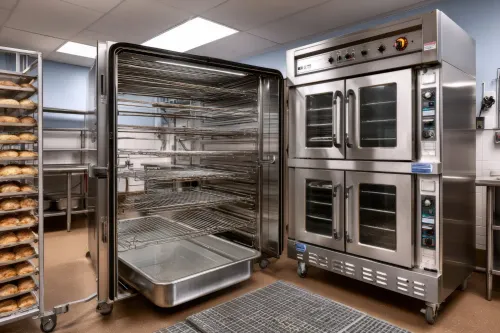
| Deck oven | Pizzas per deck cycle, including recovery time | Price each deck, stand, shipping, wiring and commissioning |
| Conveyor oven | Belt width, bake time and hourly output | Price the oven plus belt, exhaust and electrical work |
| Combination oven | Separate pizza cycles alongside bakery products | Price the controls, racks, installation and changeover time |
Calculate the installed total, not the advertised pizza stone oven price. Add the stand or legs, freight, 208–240 V service, phase conversion, disconnect, breaker, conductors, ventilation and commissioning. A countertop unit can look inexpensive beside a multi-deck oven yet produce far fewer pizzas per labour hour.
For an electric pizza oven for bakery production, divide the installed cost by usable pizzas per hour over your busiest shift, not the chamber’s theoretical capacity. Include preheat, door-open recovery and cleaning downtime.
Tajshree Bakery Machinary can help you compare a small stone deck against a two- or three-deck bakery oven by checking the nameplate load and your actual order pattern before you approve the quote.
Related product
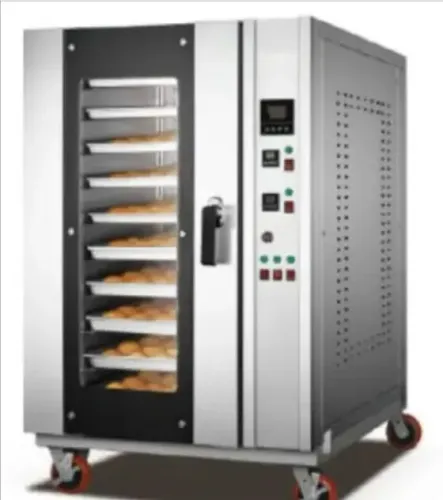
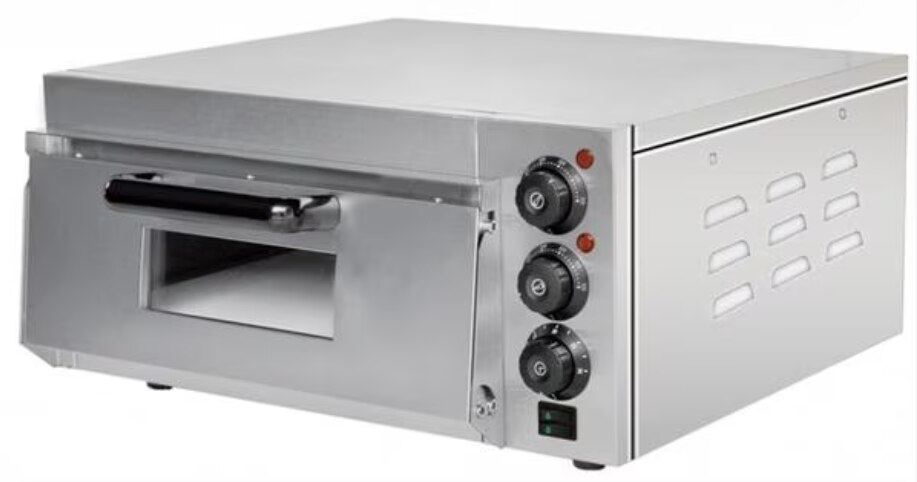
 | Pizza Oven Stone ₹18000 PIZZA STONE OVEN Model : PO-405 Dimension : 34×24×14 Stone Size : 26×17 Temperature : 0-350O C Volts : 220-240V/50-60HZ Power : 4.2KW View product → |
Frequently asked questions
How do you measure usable deck space in a commercial electric pizza oven?
Measure the actual stone surface, then subtract the clearance required around each pizza and confirm the unit of measurement.
Is the thermostat setting the same as pizza stone temperature?
No. Check the stone temperature with a suitable infrared thermometer because thermostat readings describe the setpoint, not the deck surface.
What heat controls should you compare between commercial pizza ovens?
Compare independent top and bottom heat controls, recovery time, temperature range, and bake-cycle length against your products.
What should you verify before buying a stone-deck electric pizza oven?
Verify the stone material, cleaning method, replacement process, electrical requirements, ventilation needs, warranty, and installation documents.
How should you compare pizza oven price with bakery throughput?
Compare the complete installed cost with pizzas per cycle, cycle time, labour, energy use, and the hourly output your bakery requires.
Keywords