The right griller depends on more than a 300°C claim or a low listing price. By comparing service volume, usable plate area, electrical load, heat recovery, cleaning access and after-sales support, you can specify a machine that suits your menu and counter rather than discovering its limits during a rush.
Key takeaways
- Choose single plate cooking for modest, predictable sandwich orders.
- Measure real sandwich capacity, plate clearance and counter space before ordering.
- Confirm electrical load, temperature control and recovery time with the supplier.
- Test cooking performance, safety features and documentation before accepting delivery.
Match the griller to your order volume and counter
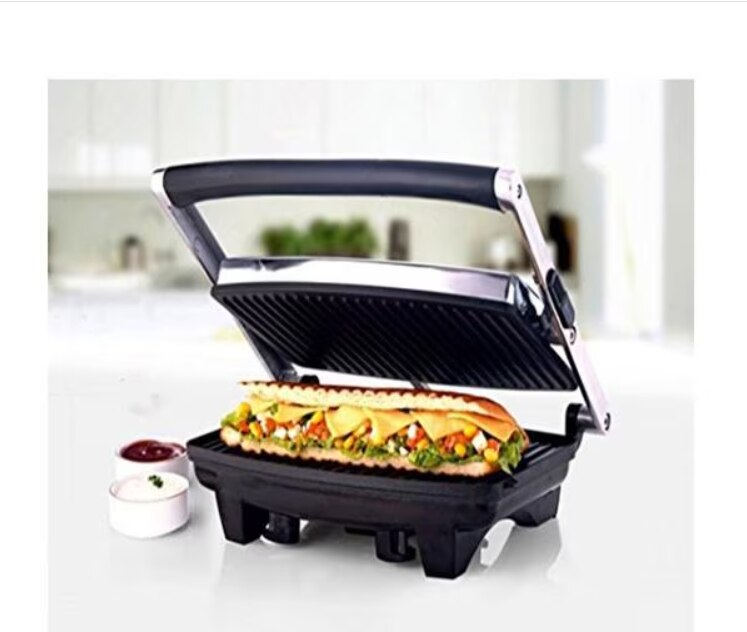
A single plate sandwich griller in Nagpur is the better choice when your counter handles a modest, predictable stream of toasted sandwiches and staff can cook orders sequentially. It occupies less counter width, costs less to run than a similarly rated double-plate unit, and leaves room for a bread display, packing area or beverage equipment.
| Option | Single plate | Double plate |
|---|---|---|
| Order pattern | One or two sandwiches per cycle | Several sandwiches at once |
| Best fit | Bakery counter, small café, limited toast menu | Breakfast rush, delivery batches, broad sandwich menu |
| Counter impact | Smaller footprint and easier storage | More working space and ventilation clearance |
| Main limitation | Queues form when orders arrive together | Higher purchase price and electrical demand |
- Your peak orders arrive steadily rather than in large simultaneous batches. A double plate adds little value if the operator spends most cycles waiting for fillings, payment or packing.
- Your menu uses one bread format and a few repeatable recipes. Match the plate to that product: flat surfaces brown evenly and clean quickly, while ridged plates leave marks but trap melted cheese and crumbs.
- Your counter cannot spare the width or power capacity. Check the nameplate before buying; a 2–3 kW unit at 230 V draws roughly 9–13 A, so ask a qualified electrician to specify the socket, plug, earthing and dedicated circuit.
- You can accept a slower response during a rush. If customers regularly order four or more sandwiches together, choose a double-plate commercial sandwich griller instead.
Check the cooking surface, clearance and real sandwich capacity
Measure the usable cooking area and the maximum closed-sandwich thickness before choosing a machine. A nominal 10 × 10 inch plate may not hold two full sandwiches once the rim, grease channel, hinge and triangular moulding reduce the working space.
Ask the supplier to place your actual bread on the plate, including the largest loaf slice or bun in your menu. Confirm the finished sandwich dimensions, number per cycle and maximum filling height in writing.
A fixed, low-clearance lid can crush thick bread, leak cheese and leave the centre cold; a floating or adjustable hinge applies more even pressure across different bread thicknesses.
A sandwich toaster for bakery work must match the product surface, not just the advertised temperature.
| Plate type | Practical result | Check before purchase |
|---|---|---|
| Flat | More even browning and simpler cleaning | Suits sliced bread and fillings that spread evenly |
| Ridged or grooved | Grill marks but greater compression and trapped cheese, oil and crumbs | Reject it if soft bread or messy fillings dominate |
| Interchangeable | Lets you change product styles | Confirm plate cost, locking method and cleaning time |
Use the supplier’s stated sandwiches-per-cycle figure to calculate capacity: include loading, heating and unloading time, not only contact time. Ask whether wet fillings, loose batter or high-sugar sauces are permitted; if they can enter the hinge or controls, the machine is the wrong tool and misuse can void the warranty.
Verify electrical load, temperature control and recovery time
A commercial sandwich griller needs more than a 300°C maximum-temperature claim. Check the nameplate voltage, phase, connected load and current, then ask whether the figure covers the complete appliance or only the heating element.
At 230 V, a 2–3 kW unit draws roughly 9–13 A, so plan a correctly earthed, dedicated circuit rather than a shared extension board. Have a qualified electrician specify the socket, plug, cable and isolator.
| Specification | What to verify | Why it matters |
|---|---|---|
| Connected load | Rated input in kW, for the complete machine | Determines circuit capacity, running cost and generator sizing |
| Heating element | Element wattage and position under the plate | A lighter element can produce slow recovery and pale edge browning |
| Temperature control | Set range, thermostat type and temperature indicator | Wide swings scorch bread or leave fillings underheated |
| Duty rating | Rated duty cycle and repeated-load recovery time | Separates production equipment from domestic units in commercial-looking cabinets |
Test the commercial sandwich griller with the intended sandwich weight for several consecutive cycles. Record the time to regain the set temperature, compare browning at the centre and edges, and check whether the handle becomes dangerously hot or the thermostat trips the circuit.
Specify the permitted food range in writing; wet fillings, loose batter and high-sugar sauces can damage hinges, controls or unsuitable coatings.
Compare the landed cost, warranty and Nagpur service support
A low listing is not a comparable sandwich griller machine price until the supplier states the complete delivered cost in writing. For a single plate sandwich griller in Nagpur, ask for a quotation that separates every charge rather than combining them into one total.
| Quote item | What the quotation must state | Why it affects comparison |
|---|---|---|
| GST | Applicable rate and rupee amount | A tax-exclusive price can appear artificially low |
| Freight | Delivery to your exact Nagpur address, including unloading | Transport charges can change the landed cost |
| Installation | Included or charged separately; electrical work excluded or included | A machine price may not cover commissioning |
| Plug and cable | Supplied specification, length and fitting cost | You may otherwise need an electrician and new accessories |
| Warranty | Duration, covered parts, labour, travel and return-shipment responsibility | “Warranty available” does not guarantee local service |
| Replacement plates | Price, availability and delivery time for plates, hinges, thermostats and heating elements | Unavailable spares can end the machine’s useful life |
| Delivery | Dispatch date and expected arrival date | A cheaper unit is costly if it misses your opening schedule |
| Electrical details | Nameplate voltage, phase, current and connected load | A 2–3 kW unit at 230 V can draw roughly 9–13 A |
Ask whether warranty labour covers on-site visits in Nagpur or only return freight. Ask for wiring diagrams and India-stock confirmation for heating elements, thermostats, hinges and plates.
Tajshree Bakery Machinary can be asked to place these terms, including intended food range, in the written quotation so suppliers are compared on serviceable ownership cost, not catalogue price.
Related product
 | Sandwich Griller(SINGLE PLATE) ₹11000 (SINGLE PLATE) Minimum Order Quantity : 1 piece Usage / Application : commercial Model Name/ Number : KC-311SSWG Temp Range Deg Celsius : 300... View product → |
Use an acceptance test before putting the griller into service
Accept the machine only after it passes repeated-load testing, not after a brief demonstration. Write the intended sandwich size, bread type, filling weight and food range into the purchase record; a commercial sandwich griller is not automatically suitable as a griddle.
This also separates a sandwich toaster for bakery use from a domestic appliance in a commercial-looking cabinet.
| Test | Accept | Reject |
|---|---|---|
| Electrical identity | Nameplate voltage, phase, connected input and current match the quotation and site circuit | Rating is unclear, or the breaker trips |
| Repeated cycles | Several consecutive cycles at the planned load recover temperature within the agreed time | Recovery slows sharply or production timing fails |
| Cooking result | Centre and edges brown evenly without crushing the sandwich | Pale edges, burnt centre, leaking cheese or uneven compression |
| Handling and controls | Handle stays safely touchable; thermostat cycles normally; plug and cable remain cool | Excessive heat, smoke, arcing or nuisance tripping |
- Run the full cycle with the actual bread and fillings, then inspect the plate for sticking, coating damage, grease channels and crumbs entering the hinge or controls.
- Confirm the flat, ridged or interchangeable plate suits the menu; ridges that trap cheese or compress soft bread are a production fault, not a cosmetic issue.
- Record the recovery time, cycle time and output from the trial, and keep photographs of the nameplate and test results with the acceptance sign-off.
Frequently asked questions
When is a single plate sandwich griller suitable for a food business?
Choose one when sandwich orders are modest and predictable, staff can cook orders sequentially, and counter space is limited.
What should you check on a commercial sandwich griller’s cooking surface?
Measure the usable plate area, clearance between plates and the number of sandwiches that fit without crushing or overlapping.
How do electrical load and recovery time affect a sandwich griller?
Confirm the rated voltage, wattage and socket requirement, then ask how quickly the plates return to cooking temperature after an order.
What should you include in a griller acceptance test?
Test heating, thermostat operation, plate alignment, handle movement, cable and plug condition, cooking consistency, cleaning access and supplied documents.
Keywords